
Four things that make a score mean something.
Every other rating system optimises for politics, volume, or self-promotion. Score doesn't.
Every rating is anchored to a real moment of collaboration, and it comes from the peers who were actually there.
Score lives in the tools you already use. Slack, GitHub. Assessments take one tap. You don't change your workflow.
Structured, anonymous ratings. No free-text. No politics. The score is a number your peers actually stand behind.
Your Score travels with you through your whole career. You control who sees it.
One skill. One moment. One tap.
You collaborated on a pull request. You paired on a design. Score asks one question: How strong were they at this? Your rating is anonymous. That's it.
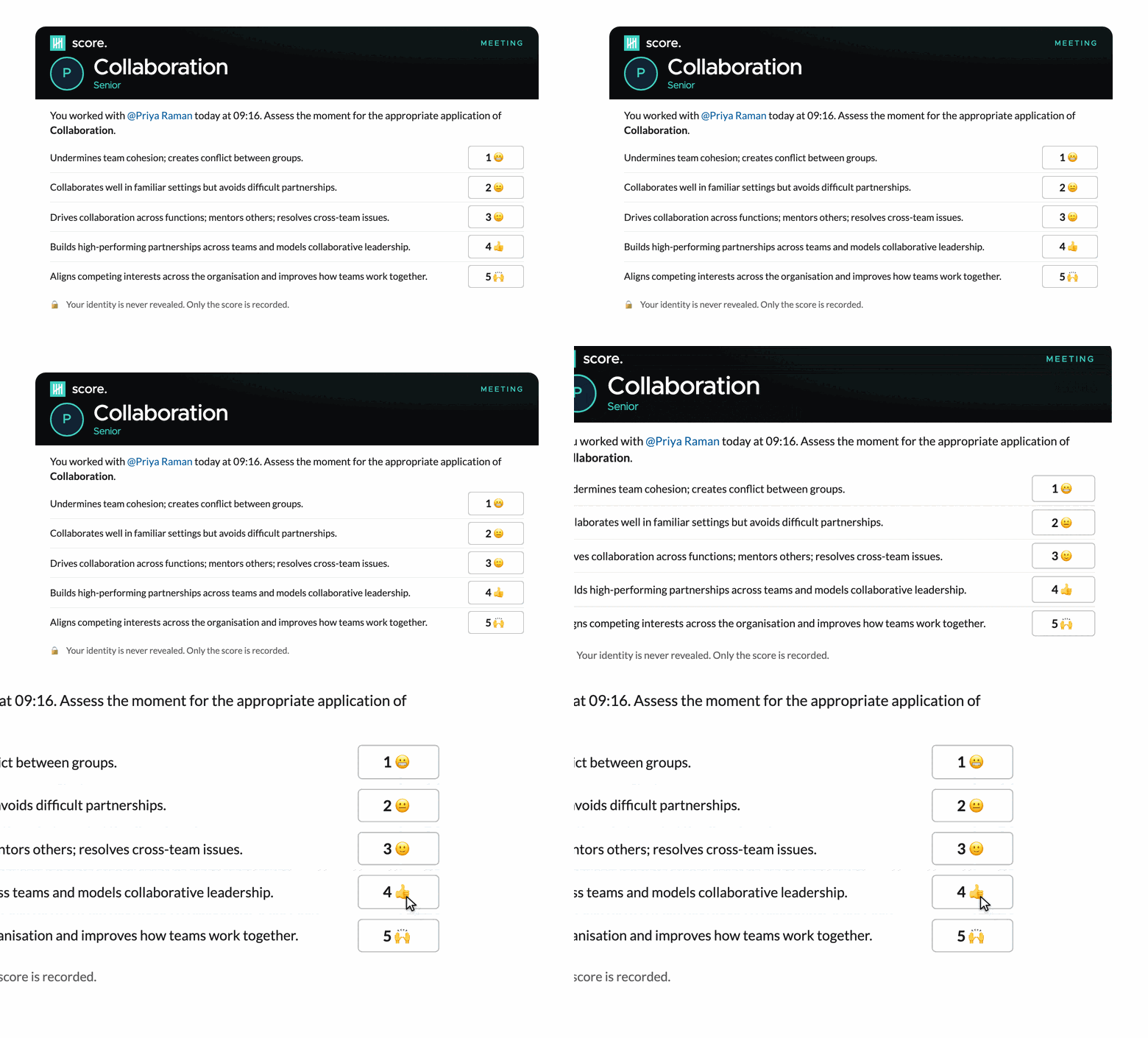
The first rating system that doesn't ask you to trust anyone.
No endorsements to game. No calibration politics. Just structured, anonymous signal from the people you actually worked with.
What keeps a score honestYou pay per assessment.
There are no seats and no licences. You are billed for the assessments your team runs. A team starting out pays $0.10 an assessment, and the rate falls as you grow. Every capability is included at every volume.
Closed Beta customers are not metered.
Three steps, then it runs itself.
Slack, GitHub, Linear and Google Calendar. One install, by somebody who can approve it. Nobody else has to do anything.
A pull request merged, a design paired on, a meeting attended. Score sees the moment and picks one colleague who was there.
They rate one skill, anonymously, and get on with their day. Scores build from there over weeks, not in a review cycle.
Know your worth.
Free for engineering teams during Closed Beta. No credit card, no contract, and one Slack install is the whole of the setup.